
Metal-to-Plastic Conversion Solutions for Japanese Companies
From Design Refinement Through Prototyping to Mass Production
Chunhui Rongsheng has completed a metal-to-plastic conversion project for a Japanese company, which has now entered mass production. Addressing thermal deformation challenges during material conversion, we conducted design improvements and manufacturing coordination through the actual project, building practical experience from solution adjustment through to production transition.
Metal-to-Plastic | Design Refinement | Prototyping & Improvement | Mass Production Transition
Discuss Metal-to-Plastic Conversion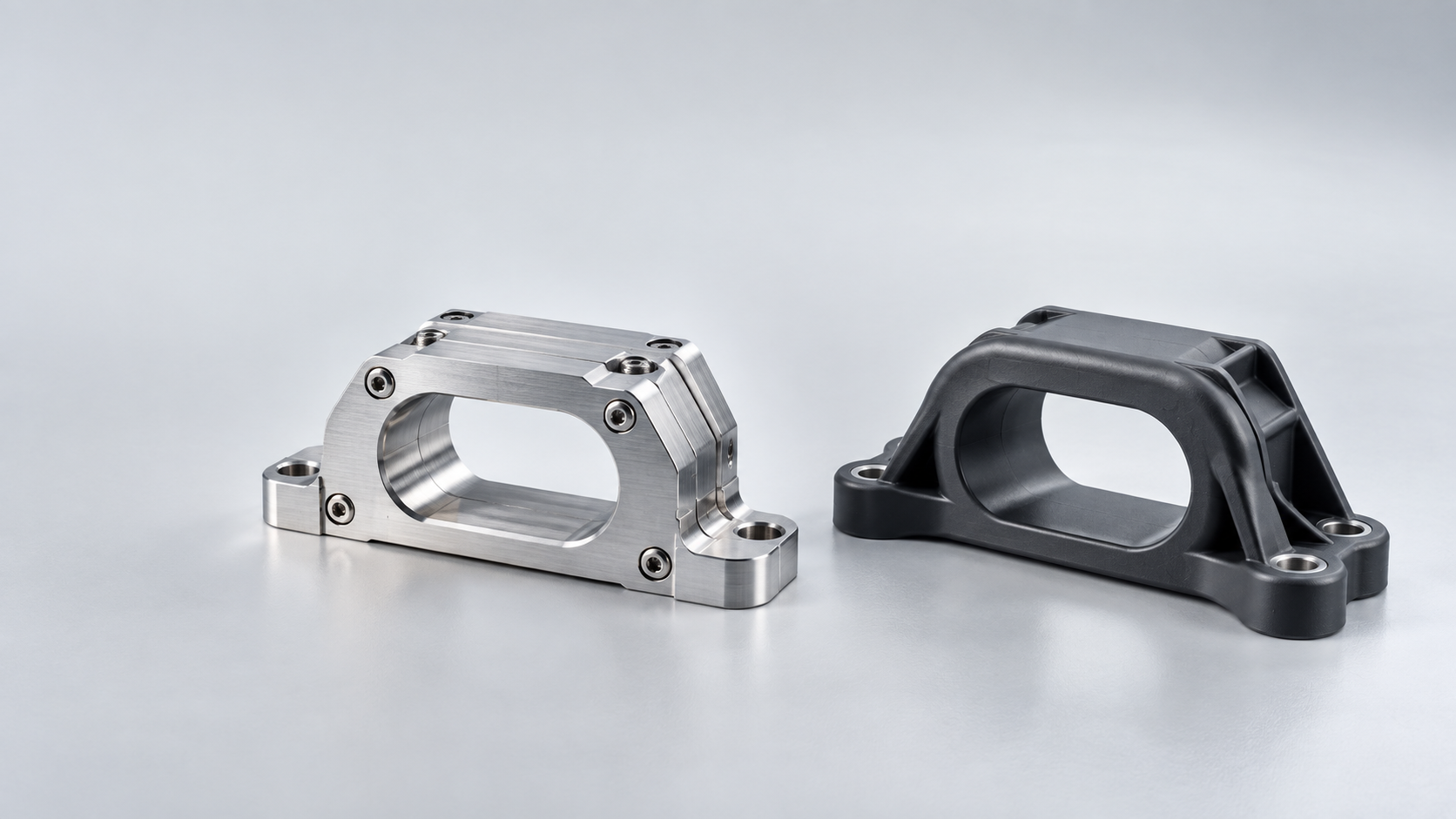
Conceptual illustration only. This does not show the client's actual product or design.
Advancing Material Conversion to Mass Production
A Japanese company was considering converting existing metal components to plastic. The project needed to meet existing usage requirements while addressing deformation, structural, and manufacturing challenges introduced by the material change.
Chunhui Rongsheng participated in the plastic conversion design and project coordination, conducting improvements for the thermal deformation issues encountered, and established handling methods suited to this project. The relevant components have now entered mass production.
This experience enables us to identify potential difficulties from material conversion earlier when clients present plastic conversion needs, and to discuss feasible solutions based on actual manufacturing conditions.
To protect client information and design intellectual property, this page does not disclose client names, equipment types, specific component locations, or key design parameters.
Can Components Still Meet Requirements After Temperature Changes?
Converting from metal to plastic requires reconsidering the relationship between material properties and structure.
Many common plastics exhibit more significant dimensional changes under temperature variations than typical metals. Temperature increases and sustained loading may also affect rigidity and shape stability. Therefore, successful assembly at room temperature does not guarantee suitability throughout actual usage.
In this project, thermal deformation was one of the key issues to address. We conducted actual improvements focusing on this challenge and applied the lessons learned to subsequent plastic conversion project evaluations.
Key Considerations When Evaluating Plastic Conversion
Usage Conditions
Actual temperature, duration, loading method, and installation constraints.
Material Suitability
Heat resistance, dimensional stability, and processing conditions.
Structure & Assembly
Whether shape, support, connection, and fit requirements adapt to material changes.
Evaluation Methods
Under what conditions to confirm prototypes, and which results serve as basis for subsequent production.
Specific solutions depend on the product and usage environment.
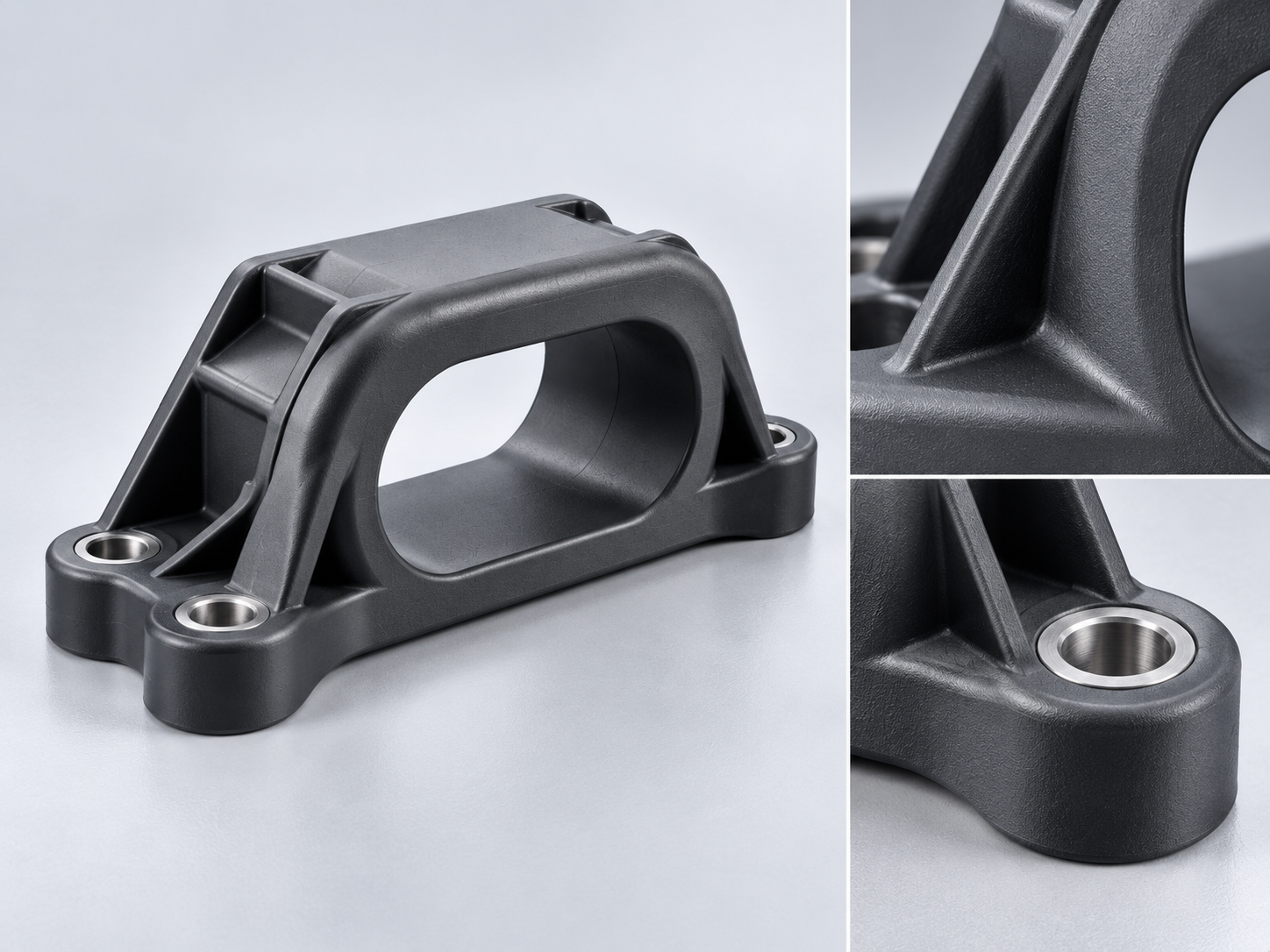
Conceptual illustration only. This does not show the client's actual product or design.
From Small-Batch Prototyping to Production
Clients need more than a prototype. They also need a clear process for managing design changes, evaluating issues, and moving into production.
Chunhui Rongsheng coordinates materials, molds, and processing partners based on project needs, supporting small-batch prototyping, refinements, and low-volume production. Throughout the project, we clarify the issues to confirm, the refinement content, and the next steps, helping clients progressively finalize their solutions.
The prototyping phase focuses on confirming design suitability, while the production phase focuses on consistently meeting agreed specifications.
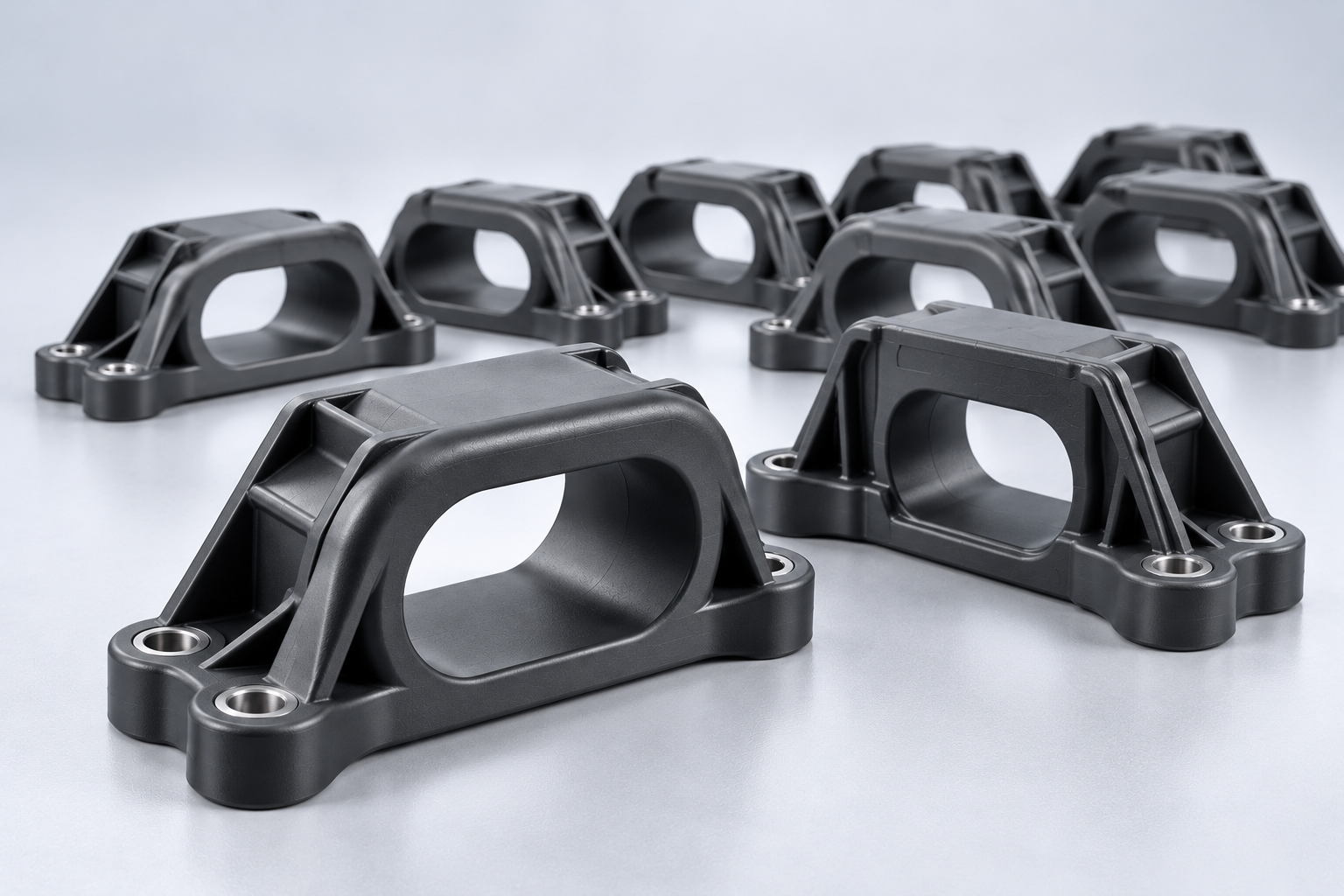
Conceptual illustration only. This does not show the client's actual product or design.
Why Consider Plastic as a Metal Alternative?
In automation, handling equipment, and industrial product development, plastic conversion can be one option for product improvement. Suitable components may offer the following benefits.
Weight Reduction
Helps reduce burden on handling, installation, or moving parts. For certain external and end-effector components in robots and automation equipment, lightweight solutions can be evaluated based on actual usage requirements.
Structure & Process Optimization
Redesign based on molding characteristics may integrate some structures, reducing part count or subsequent processing and assembly steps.
Reduced Scratching and Improved Handling
Through material selection and corner rounding, it may be possible to reduce contact scratches and improve grip. Safety performance must be evaluated based on actual usage conditions.
Comprehensive Cost Optimization
Comprehensively compare material, mold, processing, assembly, transportation, and replacement costs to determine whether plastic conversion offers economic value. Small-batch production and continuous mass production may suit different manufacturing approaches.
We start from the actual requirements of each component to determine whether plastic conversion is appropriate and which aspects are worth refining.
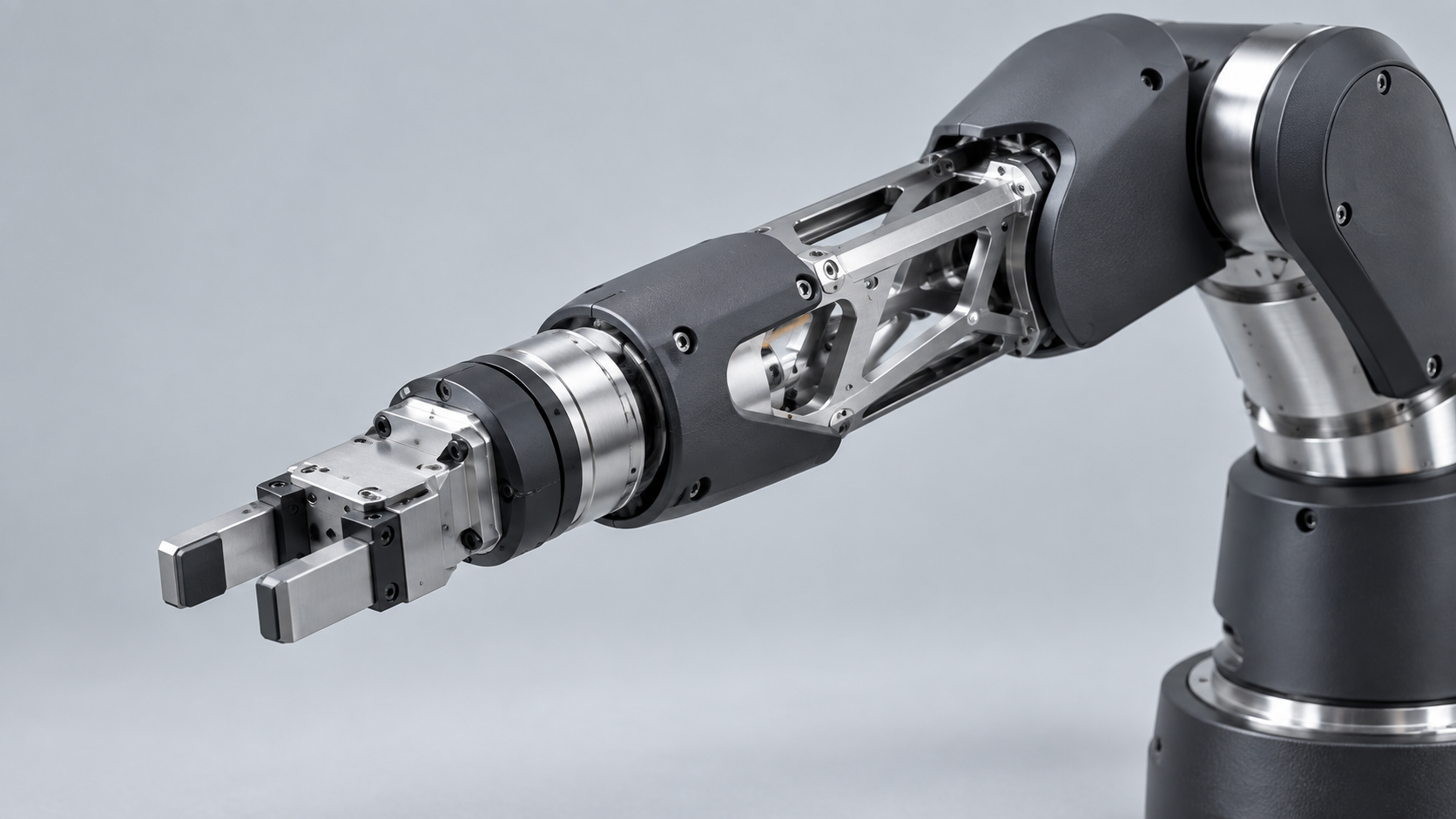
Illustrative application only. This does not depict a robot project delivered by our company.
Does Your Project Also Face These Challenges?
- •Want to reduce metal component weight but concerned about plastic strength and deformation
- •Want to prototype small batches first, then consider molds and production after verification
- •Already have a plastic conversion plan but encountering issues in assembly or usage
- •Want to consolidate material, mold, and processing coordination to reduce communication burden
- •Need a gradual transition from prototyping to low-volume or mass production supply
Please share current component usage conditions, planned quantities, and improvement goals via email. For confidential materials, we can discuss confidentiality terms and data submission methods in advance.
Discuss Metal-to-Plastic Conversionliuchunhong@dlchrs.com